

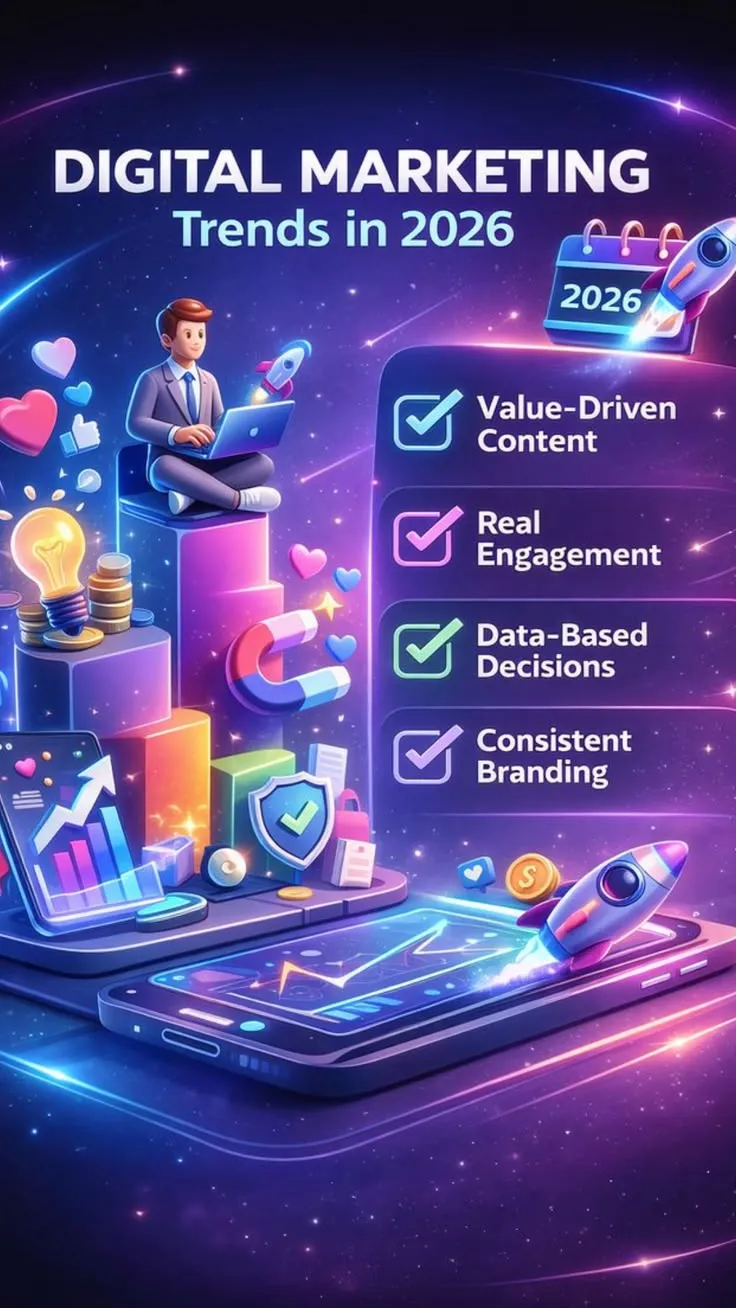
Marketing in 2026 is defined by the practical integration of artificial intelligence, a renewed focus on trusted data, and strategies that prioritize long-term brand equity over short-term noise. Businesses that adapt to these shifts are better positioned to drive efficient growth, deeper customer relationships, and measurable returns. Nearly universal AI adoption, the rise of agentic systems, stronger first-party data practices, and the expanding influence of creators and retail media are reshaping how organizations reach and engage audiences.
AI Moves from Experiment to Everyday Operations
Artificial intelligence has become foundational rather than experimental. Surveys of marketing professionals show that the vast majority now use generative or agentic AI in their daily work, with a significant portion relying on it every day. Many report meaningful efficiency gains, and a growing number of organizations have replaced certain human tasks with AI solutions.
Agentic AI—systems that can plan, execute, and refine campaigns with limited oversight—has seen rapid uptake. These agents commonly handle reporting and analytics, draft campaign briefs, create content, and assist with media planning. The result is faster execution and the ability to scale personalization, but success depends on clear measurement. Only a small share of organizations currently evaluate AI investments against defined metrics, leaving a notable gap between adoption and proven return.
For growth-oriented businesses, the priority is moving beyond pilots to production-ready applications that free teams for strategy, creativity, and relationship-building while ensuring human oversight remains central to brand voice and ethical decisions.
First-Party Data and Privacy-First Personalization
As third-party cookies continue to diminish and privacy expectations rise, first-party data has become essential. Marketers are investing in owned channels—email, loyalty programs, websites, and direct relationships—where customers willingly share information in exchange for value. Hyper-personalization now relies on behavioral and consented data to create individual customer journeys rather than broad segments.
Companies that excel at personalization generate substantially higher revenue from these efforts compared with average performers. The most effective approaches balance relevance with transparency, using consent-based systems and clear value exchanges. Zero-party data, collected through direct preferences and interactions, is increasingly prized for its accuracy and trustworthiness.
Businesses that build robust first-party data foundations gain an advantage in both targeting precision and long-term customer loyalty.
The Growing Power of Creators and Authentic Content
Creator-led marketing continues to expand as brands seek credible voices that resonate with specific audiences. A majority of marketing professionals plan to increase investment in content creators, recognizing their ability to drive cultural relevance and engagement. However, only a minority of creator content currently aligns strongly with brand messaging, highlighting the need for clearer partnerships and consistent creative direction.
Alongside creators, employee-led content is emerging as a high-trust channel. Authentic storytelling that immerses brands in culture—rather than chasing fleeting viral moments—builds deeper equity. Partnerships driven by shared values or cultural chemistry often outperform purely category-based collaborations.
Short-form video and engaging content remain high priorities for many teams, supporting brand awareness and database growth while delivering measurable returns when paired with clear measurement frameworks.
Retail Media Networks and High-ROI Channels
Retail Media Networks are gaining prominence as a performance channel. A notable share of marketers intend to increase investment in these platforms, which deliver stronger results and higher purchase intent than standard digital advertising. Close collaboration between brands and retailers, supported by integrated data, improves targeting and measurement.
Email and mobile marketing frequently rank among the highest-ROI channels, reinforcing the value of owned audiences. Organic and content marketing also continue to deliver solid returns when focused on relevance and consistency. Global advertising spend is projected to grow, with social media, search, and retail media among the faster-expanding categories.
Strategic Clarity and Long-Term Brand Building
Amid rapid technological change, successful organizations emphasize depth over constant experimentation. Strategies that slow down to build culture, trust, and long-term equity outperform those chasing every new tactic. Clear positioning, consistent messaging, and authentic experiences help brands remain memorable in an environment of algorithmic personalization and AI-mediated discovery.
Measurement is evolving to capture incrementality, brand lift, and the full customer journey rather than relying solely on last-click attribution. Teams that connect activation, data, and outcomes more tightly convert innovation into sustained growth.
Preparing for Sustainable Growth
The marketing landscape of 2026 rewards organizations that treat AI as an efficiency and personalization engine while protecting human judgment and brand authenticity. Building first-party data capabilities, aligning creator and employee content with core messaging, investing in high-performing channels such as retail media and email, and maintaining strategic clarity position businesses for resilient growth.
Those that combine technological capability with genuine customer understanding will navigate the year’s shifts most effectively, turning emerging trends into durable competitive advantage.
Read more – gloryhouseworld.com